
Gilbert vs Tempe, AZ: 2026 Real Estate Comparison Guide
Both cities sit in Maricopa County and are part of the Phoenix metro, but they're not interchangeable. Tempe hugs the eastern edge of Phoenix directly, making it a central transit hub. Gilbert stretches further southeast, offering a more expansive suburban layout and a different housing mix entirely for anyone living in Gilbert, AZ.
Buyers comparing the two usually end up weighing commute times, housing styles, and property tax structures. Which one makes sense for you comes down to your budget, the type of property you want, and how much driving you're willing to do every day.
Housing Market and Home Prices
These two markets differ in both price and available inventory. Gilbert currently shows roughly 1,001 active listings - buyers have real selection here. About 351 homes closed in a single month, which tells you the pace of sales is steady without being frenetic.
Tempe generally carries a slightly lower price point, though specific neighborhoods vary depending on proximity to the water or downtown. What you get for your money looks quite different between the two, so it's worth being specific about what you're actually shopping for.
Median Home Prices
Gilbert's median sale price is around $579,000, and homes are averaging about 46 days on the market. Values have seen a slight year-over-year adjustment, but they've held up well across most residential neighborhoods. Earlier 2026 data put list prices in the $647,000 range at points during the year.
Tempe's entry point is a bit lower, with a median home price around $506,000. Some monthly data sets place single-family homes there between $480,000 and $499,000, though the average sale price can push closer to $576,000 depending on the neighborhood and the condition of the home.
Property Types Available
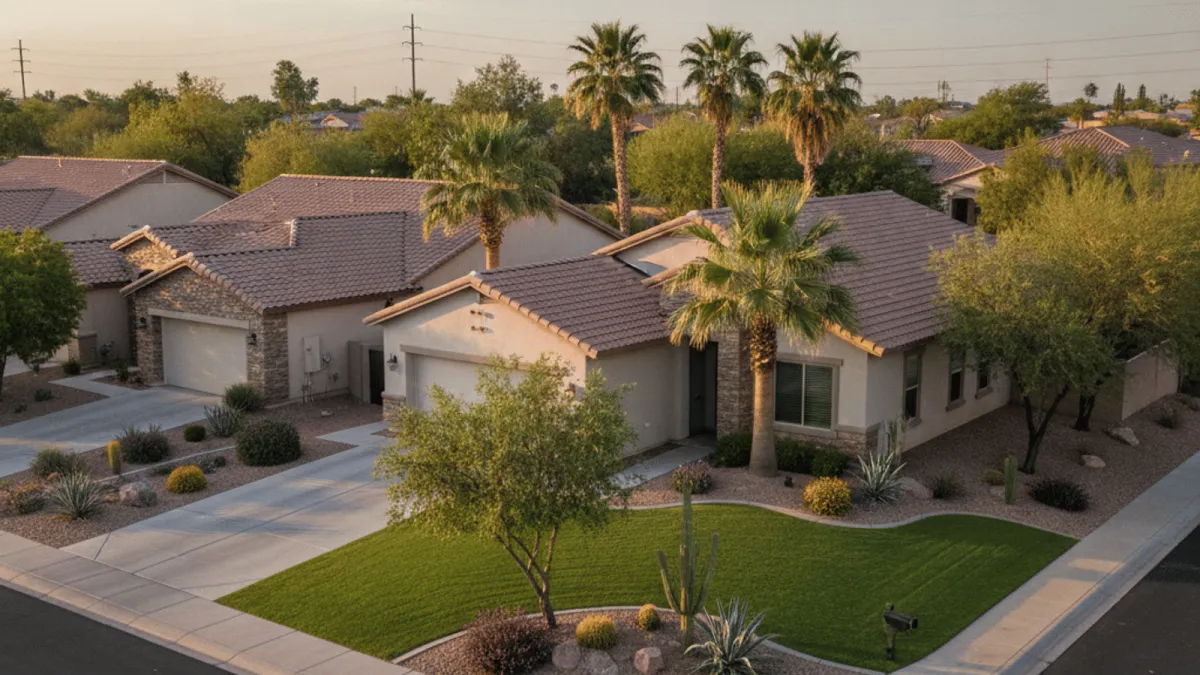
Gilbert's housing stock is dominated by single-family homes, most of them inside large planned developments. If you're looking for bigger lots, newer construction, or a three-car garage, this is where your search probably starts.
Tempe runs a different mix - condominiums, townhomes, and older single-family properties spread across a denser footprint. Buyers who want attached housing, a smaller square footage, or low-maintenance exteriors will find more options here than they will in Gilbert.
Cost of Living and Property Taxes
The purchase price is only part of the picture. Property taxes shape your monthly budget in a real way, and both cities fall below the national median property tax rate of 1.02% - though they fund their municipal services differently.
Run the numbers on both city-level assessments and county levies before you lock in a mortgage payment. The difference isn't enormous, but it's real.
Property Taxes Explained
Gilbert doesn't impose a primary property tax. Town infrastructure gets funded through bonds or cash from sales tax revenues instead. There is a secondary tax, which puts median effective rates somewhere between 0.43% and 0.49% depending on the ZIP code - 85296 or 85298, for example.
Tempe homeowners pay a median effective property tax rate of roughly 0.53%. About 22% of that bill goes directly to the City of Tempe, with the rest funding local school districts and Maricopa County services.
Everyday Expenses
General living costs in both cities track closely with the broader Phoenix metro. Utilities, groceries, and local services stay relatively consistent whether you're in Tempe or Gilbert.
The bigger variable in monthly budgets is usually housing costs and transportation. If you're commuting from the southeastern suburbs, fuel and vehicle maintenance can quietly add up over time.
Commute Times, Transit, and Location
Where you land in the Phoenix metro shapes your day more than almost anything else. Tempe sits immediately east of Phoenix with quick access to the urban core. Gilbert is further southeast, and that distance shows up in your commute if you're working downtown.
The two cities are about 14 miles apart - a 22-minute drive in normal traffic. How fast you can reach regional employment hubs or the airport depends heavily on which freeways are actually convenient from where you live.
Major Highways and Driving Times
US-60 - the Superstition Freeway - is the main corridor for Tempe, Mesa, and Gilbert. It connects directly to Interstate 10 and downtown Phoenix and handles a heavy daily commuter load.
Loop 202 links both cities as well. It runs along the northern bank of the Salt River through Tempe, with views of the downtown skyline, before continuing east toward Gilbert and Chandler.
Public Transportation Options
Tempe has real public transit infrastructure, including direct access to the Valley Metro light rail. That connection to downtown Phoenix makes it a practical choice for anyone who'd rather not drive every day.
Gilbert is effectively car-dependent. The Valley Metro light rail currently terminates in Mesa and doesn't extend south into Gilbert, so if you live there, you're driving.
Lifestyle and Local Amenities
These two cities have genuinely different feels on the ground, not just on paper. Tempe is denser and more urban, organized around the riverfront and a large university presence. Gilbert is more spread out, with a suburban design, a good park system, and a concentrated downtown district.
Worth spending time in both before you decide. Which commercial center fits your daily routine is a legitimate factor.
Parks and Recreation
Tempe Town Lake is the city's central recreational anchor - you can see it from Loop 202 as you pass through. Residents use it year-round for boating, running, and community events.
Gilbert has built out an extensive municipal park system with multi-use trails woven directly into its residential developments. Outdoor space is clearly a priority in how the town is laid out.
Dining and Entertainment
Downtown Tempe has a dense commercial district - restaurants, venues, shops, nightlife, street festivals. It draws people from across the metro, not just residents.
Gilbert's Heritage District is the town's answer to that. It's walkable, historic in feel, and anchored by local restaurants, breweries, and retail. A different energy than Tempe's core, but its own draw.
Frequently Asked Questions
How do home prices and property taxes in Gilbert, AZ compare to Tempe?
Gilbert's median home price of $579,000 runs higher than Tempe's median of $506,000. On the tax side, Gilbert homeowners see effective rates between 0.43% and 0.49%, while Tempe's median effective rate sits slightly higher at 0.53%.
Is Gilbert a better place to buy a house for families compared to Tempe's college-town vibe?
Gilbert offers a larger inventory of spacious single-family homes and extensive suburban park systems. Tempe provides a denser, urban environment with more condominiums and immediate access to the Valley Metro light rail.
Are HOA fees and neighborhood restrictions more common in Gilbert than in Tempe?
Gilbert has a large inventory of single-family homes, many inside subdivisions with community associations. Tempe's mix of older single-family properties and condominiums generally means monthly association dues for the condo and townhome side of the market, to cover shared building maintenance.
How much longer is the daily commute to downtown Phoenix from Gilbert compared to living in Tempe?
Tempe sits directly east of Phoenix with a shorter commute via US-60 or the Valley Metro light rail. Gilbert is further southeast - you're adding roughly 14 miles, or about a 22-minute drive, just to reach Tempe before continuing into Phoenix.
Which city generally offers better long-term resale value for single-family homes, Gilbert or Tempe?
Both cities maintain strong housing markets within Maricopa County. Gilbert's median sale price is around $579,000 with homes selling in roughly 46 days; Tempe's median is near $506,000 with its own steady buyer demand.
Can I find more new construction homes in Gilbert, AZ compared to Tempe's older neighborhoods?
Gilbert generally has more room for new single-family home developments than landlocked Tempe does. In Tempe, buyers will mostly find older single-family homes or newly built condominium and townhome projects near the city center.