
Gilbert vs Mesa, AZ: 2026 Cost Comparison
Maricopa County buyers searching the eastern Phoenix metro almost always end up comparing these two. Gilbert and Mesa share a border along State Route 87 - also known as Country Club Drive or Arizona Avenue - and both plug you straight into the broader East Valley. On a map they look like one continuous suburb. In practice, living in Gilbert, AZ is quite different from Mesa.
Mesa is larger and older, which means more housing types, more price points, and neighborhoods with genuinely different characters. Gilbert came up later, and that shows in the neighborhood layouts, the construction vintage, and the HOA structures you'll encounter almost everywhere you look.
Real Estate Prices and Market Pace
As of mid-2026, the median sale price in Gilbert sits at approximately $579,000. Active inventory runs about 1,001 properties, and homes are spending roughly 46 days on the market before closing. The sale-to-list ratio averages 98.3%, and only about 14% of Gilbert homes sell above list price - so while the market is healthy, you're not walking into bidding wars as the default.
Mesa comes in lower. Median sale prices range from $445,000 to $495,000, with an average price per square foot of roughly $268 to $275. Gilbert runs higher on a per-square-foot basis too, between $293 and $295. Year-over-year, Gilbert has seen a slight dip of about 0.6% in median sale prices. Mesa has held relatively steady, though appreciation and demand vary enough by ZIP code and property condition that broad averages only tell you so much.
Typical Property Styles and Neighborhoods
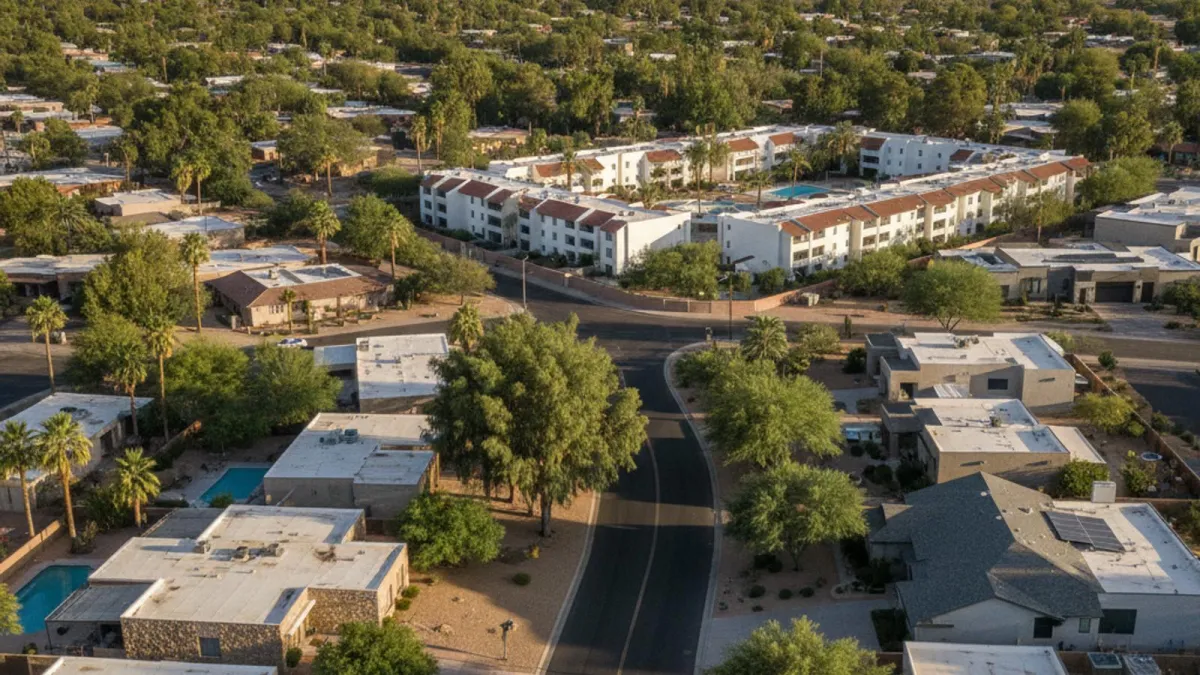
Mesa's geographic size gives you real variety - mid-century builds, condominiums, established neighborhoods without HOAs, and newer developments out on its eastern edge. If you want architectural range or a property without association rules, Mesa is where you're going to find it.
Gilbert is a different story. The town is dominated by master-planned communities built within the last three decades. That means mandatory HOAs, uniform exterior guidelines, and shared amenities like community pools or private parks are essentially the standard. If newer construction and structured neighborhood guidelines appeal to you, that's a feature. If they don't, you'll want to know that going in.
Property Taxes and Daily Living Costs
Gilbert funds its infrastructure through sales taxes and municipal bonds rather than a primary property tax. The median effective property tax rate there is about 0.46%, and once you layer in school district levies and special assessments, the total typically lands between 0.68% and 0.9%.
Mesa's median effective property tax rate runs 0.44% to 0.49% at the base level, but with local districts and special assessments included, the total often reaches 0.75% to 1.2%. Both cities sit well below Arizona's state median base rate of 0.51% and the national median of 1.02% - so neither will shock you coming from most other markets.
Assessing the Total Monthly Payment
The tax difference is worth running through your actual numbers before you make assumptions. A lower purchase price in certain Mesa ZIP codes can come with a higher overall tax percentage depending on which school district boundaries and local assessments apply to that specific property - so the cheaper house doesn't always mean a cheaper monthly payment.
Utility rates and municipal fees for water and trash collection also differ between the two cities. And in Gilbert, where non-HOA properties are rare, monthly HOA dues are a fixed cost you need to build into your budget from the start.
Highway Access and Local Amenities
U.S. Route 60 and Loop 202 are the main corridors for both cities, and they meet at the SuperRedTan Interchange in Mesa, distributing traffic across the East Valley. State Route 87 connects the two cities directly as a major local artery. Loop 202 continues south through Gilbert before turning west toward Chandler, so residents in either city have workable routes to downtown Phoenix and Sky Harbor International Airport.
Where it matters is geography. Mesa's northern and western neighborhoods sit closer to the urban core, which can shorten daily drive times depending on where you're headed.
Parks and Outdoor Recreation
Both cities maintain extensive municipal park systems and trail networks, but they're oriented differently. Mesa's eastern border puts you at Usery Mountain Regional Park and direct access to the Tonto National Forest - serious desert hiking and open space at a scale Gilbert simply doesn't have.
Gilbert's outdoor infrastructure is more integrated into the subdivisions themselves. The Riparian Preserve at Water Ranch and various municipal sports complexes are central to the town's park system, and paved multi-use trails connect many neighborhoods for cycling, running, and walking.
Frequently Asked Questions
Is it more expensive to buy a house in Gilbert, AZ or Mesa?
Gilbert is typically more expensive. The median sale price in Gilbert is approximately $579,000. Mesa's median ranges from $445,000 to $495,000. Gilbert also carries a higher average price per square foot - around $293 to $295, compared to Mesa's $268 to $275.
How do property taxes in Gilbert compare to neighboring Mesa?
Gilbert's base effective rate is around 0.46%. Mesa's runs 0.44% to 0.49%. When you include school and assessment districts, Mesa's total rate often reaches 0.75% to 1.2%, while Gilbert's comes in at 0.68% to 0.9%.
Which city is better for buyers moving to the East Valley, Gilbert or Mesa?
That depends on what you're actually looking for. Mesa offers more architectural variety, non-HOA neighborhoods, and lower median home prices. Gilbert has newer master-planned communities, extensive paved trail networks, and uniform neighborhood designs. Neither is objectively better - they're just different products.
Does Gilbert or Mesa offer a better commute to downtown Phoenix and the airport?
Both connect directly via U.S. Route 60 and Loop 202. Mesa's northern and western neighborhoods sit geographically closer to Phoenix, which can take time off the daily drive depending on your specific destination.
Are real estate values appreciating faster in Gilbert or Mesa?
As of mid-2026, Gilbert has seen a slight year-over-year dip of about 0.6% in median sale prices. Mesa's market has remained steady, but specific appreciation rates depend on the exact ZIP code and property type - the city-wide number is a starting point, not a conclusion.
What are the biggest downsides to choosing a home in Gilbert over Mesa?
Higher upfront purchase prices, and a market almost entirely controlled by mandatory HOAs. If you want a property without association rules or you're drawn to historical architecture, Gilbert's newer housing inventory is going to work against you.