
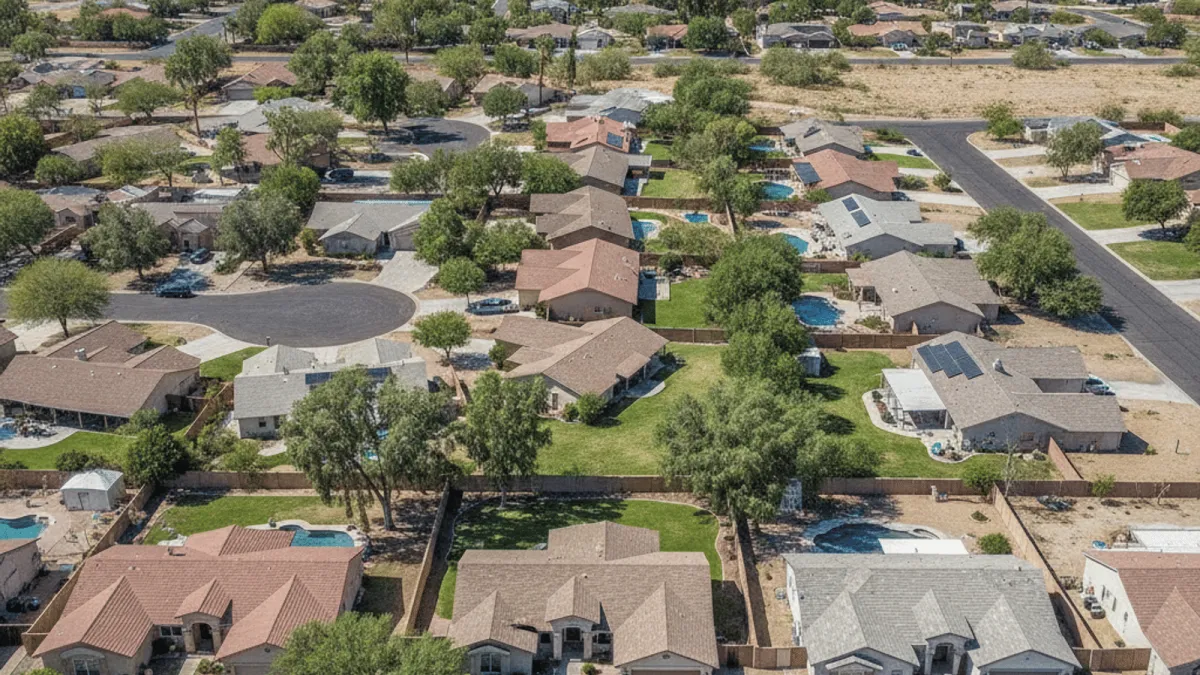
Choosing Between Gilbert and Maricopa, AZ for Your Next Home
The Phoenix metro spreads across multiple counties, and that geography gives buyers genuinely different options depending on what they're trying to spend and how they want to live. Two of the most common comparisons I hear from buyers right now are Gilbert in Maricopa County versus the city of Maricopa in Pinal County. Anyone considering living in Gilbert, AZ should weigh these differences carefully.
They're not interchangeable. The decision really comes down to how much weight you put on commute time, purchase price, and access to infrastructure that's already built - not still being planned. Here's an honest look at both, as of mid-2026.
Geographic Layout of the Southeast Valley
Gilbert sits in the southeast portion of Maricopa County, which keeps you reasonably close to the core employment hubs of the Phoenix metro. That central position translates to shorter drives to neighboring commercial districts and professional centers - a real advantage if you're working anywhere in the inner metro.
The city of Maricopa is a different story. It's located further south in Pinal County, separated from the immediate Phoenix suburbs by a stretch of desert. That separation creates room for a lot of residential development, but it also means more distance for anyone commuting into downtown Phoenix. That trade-off is the whole conversation, really.
Housing Market Trends and Property Types
Gilbert's market is established. As of mid-2026, there are around 1,001 active listings, the median sale price sits at roughly $579,000, and homes are averaging about 46 days on the market before closing.
Maricopa generally offers a lower entry price for buyers willing to move further out into Pinal County. New construction drives a significant portion of that market, and you can often get into a newly built home that would exceed your budget if it were located closer to Phoenix.
Available Homes in Gilbert
Homes in Gilbert are selling close to asking - the average sale-to-list ratio is about 98.3%, and around 14% of homes are actually closing above list price. That reflects steady demand in a market where the land is largely spoken for.
The inventory is mostly single-family homes built over the last three decades. Don't expect many brand-new developments; most of the available land has already been built out.
Available Homes in Maricopa
Maricopa has a high concentration of master-planned communities that have expanded rapidly over the last several years. Community pools, sports courts, and extensive walking paths tend to come standard in these subdivisions - built in by the developer, not added later.
Because the area is still actively growing, you can often work directly with a builder to select your lot, floor plan, and finishes. That abundance of new inventory is part of what keeps pricing lower than in the fully developed suburbs closer to Phoenix.
Lot Sizes and Community Structures
Gilbert offers a mix - traditional suburban lots, luxury estates, properties with mature landscaping. If you want a larger parcel, some buyers specifically focus on the town's rural properties to find it.
In Maricopa, lots within the master-planned communities tend to follow standard suburban dimensions; the goal is density, not acreage. If you want land in Pinal County, you'll usually need to look just outside the main city limits.
Local Taxes and Monthly Expenses
Because these two cities sit in different counties, the property tax structures aren't the same. A home in Maricopa County carries a different tax rate than one in Pinal County, and that difference shows up in your monthly payment every single month - not just at closing.
Both cities also rely heavily on HOAs to manage neighborhood amenities and community standards, and those monthly dues factor directly into your debt-to-income ratio when you're applying for a mortgage. Don't treat them as an afterthought.
Property Tax Differences
Gilbert properties are assessed under the Maricopa County tax system, which funds local services and municipal infrastructure. Rates vary somewhat depending on the specific neighborhood bonds tied to a property, so always pull the actual tax history on any home you're serious about.
Maricopa falls under Pinal County's jurisdiction. The tax revenue there is doing a lot of work right now, funding the expanding infrastructure required to support the city's rapid residential growth.
Homeowners Association Dues
Most master-planned communities in both cities require mandatory HOA membership. Those fees cover shared spaces, neighborhood parks, and community recreation centers.
Ask for the HOA disclosure early - before you've fallen in love with the floor plan. Some subdivisions have multiple layers of associations, so you might be paying a master community fee on top of a separate neighborhood assessment.
Daily Commute and Transportation
Where you work is probably the most practical filter in this whole decision. The distance to major employment centers in Phoenix affects every single morning and evening you spend in either of these cities.
Gilbert has direct access to the Loop 202 freeway, which ties into the broader Phoenix highway system. Maricopa relies on State Route 347 - SR 347 - as the primary corridor in and out of the city.
Driving into Phoenix
From Gilbert, the Loop 202 gets you into downtown Phoenix and neighboring employment hubs with multiple route options available when traffic builds up. It's not a frictionless commute, but the flexibility helps.
From Maricopa, you take SR 347 north to connect with the broader freeway system. That road is the main arterial out of the city, which means when traffic is heavy, there's no real alternate route. Peak-hour travel times are worth testing before you commit.
Regional Transit Access
The Phoenix metro is car-dependent, and both of these cities reflect that fully. Most residents drive to work, to school, to errands. That's not a knock on either place - it's just the reality of this region.
The most useful thing you can do is drive your actual commute during actual rush hour before you make an offer. No map app substitutes for that.
Infrastructure and Local Amenities
Gilbert is a fully mature suburb. The roads, commercial centers, and public services have been built out over decades to support a large, established population. You're not waiting for a grocery store to open.
Maricopa is actively expanding its commercial footprint to keep up with its residential growth. The city has added services at a real pace in recent years, but residents do still occasionally make the drive closer to Phoenix for specialized retail. That's honest - and it's worth factoring in if you have specific needs.
Outdoor Recreation
Both locations have put genuine effort into outdoor spaces. Gilbert has a network of municipal parks connected by multi-use trails built for cyclists and pedestrians.
Maricopa's recreational spaces are largely woven into its master-planned communities - large parks and recreation areas built directly by the developers as part of the subdivision design.
Retail and Dining Corridors
Gilbert has a wide variety of shopping and dining options, from large retail power centers to smaller commercial plazas. For most day-to-day needs, you don't have to leave town.
Maricopa has been attracting new grocery chains, restaurants, and big-box retailers as the population grows. The basics are covered locally, with more commercial projects currently under construction. It's a trajectory, not a finished product - and that's not necessarily a problem depending on what you need right now.
Frequently Asked Questions
How much more expensive is it to buy a home in Gilbert compared to Maricopa, AZ?
Gilbert is generally more expensive, with a median sale price of roughly $579,000. Maricopa offers a lower entry point for buyers, as its abundant new construction often costs less than older, established homes in Gilbert.
How does the daily commute to downtown Phoenix compare between Gilbert and Maricopa?
Commuting from Gilbert is generally faster and offers more route options via the Loop 202 freeway. Maricopa requires drivers to use SR 347 to reach the broader freeway system, which increases travel times during peak rush hour.
Will a house in Gilbert, AZ appreciate faster than a newer, more affordable build in Maricopa?
It depends on broader market shifts, but Gilbert's limited remaining land often supports stable property values. Maricopa continues to add new inventory, which can moderate price growth for existing homes in the short term.
Are property taxes and HOA fees significantly different between Gilbert and Maricopa neighborhoods?
Yes, because the cities are in different counties. Gilbert properties are assessed in Maricopa County, while Maricopa homes fall under Pinal County tax rates.
Does Gilbert offer enough community amenities and top-rated schools to justify its higher housing costs?
Many buyers find the higher median price of $579,000 justified by the mature infrastructure. Gilbert provides immediate access to established commercial centers, extensive municipal parks, and a wide variety of dining options.
Is buying a house in Maricopa considered too isolated compared to the centralized location of Gilbert, AZ?
It depends on your daily routine. Maricopa is separated from the immediate Phoenix suburbs by a stretch of desert, which requires a longer drive for certain specialized services, though the city continues to build its own retail and dining corridors to keep conveniences local.