How Much Is Your Home Worth?

Contact
ReMax Fine Properties
License #: SA550891000
License #: 268528
355 E Germann Rd #130, Gilbert AZ 85297
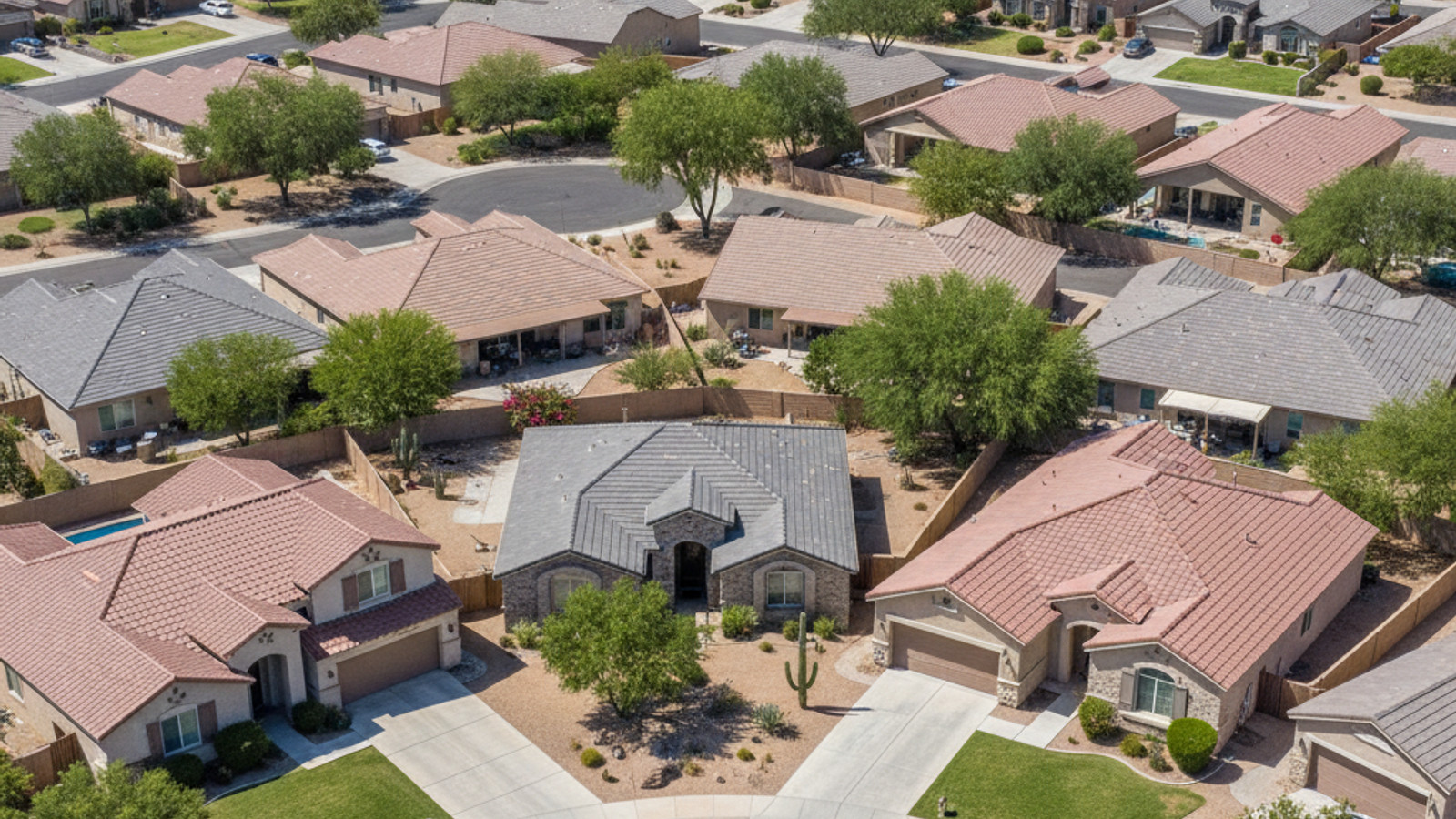
Moving to Gilbert AZ: 2026 Real Estate Market Snapshot
Relocating to the East Valley requires a solid understanding of the local landscape, especially when considering moving to Gilbert AZ. This town has evolved from an agricultural hub into a major fixture of the Phoenix metropolitan area. Buyers looking at Maricopa County often weigh this area against neighboring Chandler or Scottsdale to find the right balance of housing costs and amenities.
Navigating the 2026 real estate market here means looking closely at master-planned communities and commuting routes. Gilbert sits roughly 22 miles southeast of downtown Phoenix, giving residents distinct logistical advantages depending on where they buy. Understanding the specific property taxes, drive times, and local infrastructure is essential before making a purchase.
Housing Market and Cost of Living in Gilbert
The local housing landscape is heavily defined by single-family homes and townhouses situated within master-planned communities. Buyers entering the market in 2026 will find that inventory levels maintain a steady pace, requiring decisive action when a well-priced property hits the Multiple Listing Service. Most neighborhoods feature Homeowners Associations, meaning buyers must factor monthly HOA fees into their overall housing budget.
Evaluating the cost of living in Gilbert requires looking beyond the purchase price to include Maricopa County property taxes and utility rates. While living expenses here trend slightly higher than the national average, they remain highly competitive compared to other major western hubs. The clear takeaway for buyers is that purchasing a home in the East Valley demands a thorough review of monthly carrying costs rather than just the base mortgage.
Current Real Estate Prices and Rent Rates
Current data shows the median home price in Gilbert ranges between $570,000 and $650,000, depending heavily on the specific zip code. Homes that are priced accurately typically spend a moderate number of days on the market, reflecting a balanced environment for both buyers and sellers. Single-family homes with modern updates or pool access tend to move the fastest.
The rental market offers a variety of options for those who prefer to lease before buying. Average monthly rent spans from roughly $1,570 for a standard one-bedroom apartment to around $2,400 for a single-family house. Renting a detached property provides a practical way to experience different neighborhoods before committing to a long-term mortgage.
Transportation and Commuting Logistics
Geographic positioning plays a massive role in daily life for East Valley residents. Gilbert shares borders with Mesa to the north, Chandler to the west, and Queen Creek to the south, creating a vast interconnected suburban grid. Access to major regional highways - specifically the US-60 and Loop 202 - dictates how easily residents can navigate the wider Phoenix metropolitan area.
Personal vehicles remain the primary mode of transportation throughout the region. The town benefits from direct access to the US-60, also known as the Superstition Freeway, along its northern edge. Additionally, the Loop 202 Santan Freeway cuts directly through the southern portion of the town, providing a crucial artery for cross-valley travel.
Highway Access and Drive Times
Commuting from Gilbert requires factoring in significant variations between off-peak travel and rush hour traffic. Buyers should map their specific work locations from prospective neighborhoods to get an accurate picture of daily transit.
Downtown Phoenix: Travel typically takes 25 to 30 minutes during off-peak hours, but commuters should expect 40 to 50 minutes or more during heavy rush hour traffic.
Downtown Mesa and Tempe: Reaching these adjacent cities usually requires a manageable 15 to 20-minute drive.
Phoenix Sky Harbor International Airport: Standard travel time is roughly 20 to 30 minutes, though peak traffic can push the drive to 45 or 50 minutes.
Local Amenities and Healthcare Facilities
Infrastructure and commercial developments are distributed evenly across the town, providing residents with immediate access to essential services. The Heritage District serves as the downtown core, offering a dense concentration of local dining, retail, and entertainment venues. This central hub features historic building facades alongside modern commercial spaces, functioning as the primary gathering space for community events.
Healthcare access is anchored by the Mercy Gilbert Medical Center, a major facility serving the southeastern valley. This 197-bed full-service hospital operates as a level III trauma center to handle complex medical needs. It also features a joint Women's and Children's Pavilion in partnership with Phoenix Children's Hospital, ensuring comprehensive local care.
Retail and Outdoor Recreation
Beyond the downtown corridor, residents utilize several large-scale shopping centers and municipal parks. These facilities are designed to handle the high volume of residents living in the surrounding master-planned developments.
SanTan Village: An expansive open-air retail center featuring major anchors like Apple, Dillard's, Macy's, Lululemon, and Harkins Theatres, alongside a public splash pad.
Riparian Preserve at Water Ranch: A 110-acre wetland environment offering 4.5 miles of trails, seven ponds, over 200 recorded bird species, and the Gilbert Rotary Centennial Observatory.
Gilbert Regional Park: A massive municipal project providing extensive outdoor infrastructure, sports courts, and event spaces for the community.
Education and School District Boundaries
Buyers evaluating real estate must pay close attention to municipal boundaries, as the town is served by multiple distinct educational entities. The primary public education providers are Gilbert Public Schools and the Chandler Unified School District. Boundary lines zig-zag across different zip codes, meaning a home's physical address strictly dictates its school assignment.
Post-secondary education is highly accessible without leaving the immediate East Valley area. The Arizona State University Polytechnic Campus operates nearby, serving over 6,000 students with a focus on applied sciences and engineering. Additionally, Chandler-Gilbert Community College provides educational pathways for over 16,000 students right on the town's border.
Gilbert Public Schools and Chandler Unified
Gilbert Public Schools operates 40 separate facilities that accommodate an enrollment of over 35,000 students. The district offers a variety of specialized academic tracks, including Traditional K-6, Dual Language Immersion, International Baccalaureate, and Career and Technical Education programs. These diverse options allow residents to select educational environments that match specific academic goals.
The western and southern portions of the town often fall within the Chandler Unified School District. This massive district manages 45 schools and serves a student population exceeding 44,500 across the East Valley. Buyers should always verify the exact district boundaries through official county maps before submitting a home offer.
Frequently Asked Questions About Moving to Gilbert
What is the cost of living in Gilbert, AZ?
Living expenses in Gilbert run slightly above national averages, driven primarily by housing costs. In 2026, buyers can expect median home prices between $570,000 and $650,000, while average rents hover around $2,400 for a single-family home. Residents must also budget for property taxes, local utilities, and typical HOA fees.
What are the job opportunities like in Gilbert, AZ?
The local economy is supported by major employers in healthcare, education, and retail. Mercy Gilbert Medical Center and the local school districts provide thousands of positions within the town limits. Additionally, highway access allows residents to easily commute to expanding tech and finance hubs in neighboring Chandler and Tempe.
What is the weather like in Gilbert, AZ?
Gilbert experiences a classic desert climate characterized by extremely hot summers and mild, pleasant winters. Summer temperatures routinely exceed 100 degrees from June through September, requiring reliable home air conditioning. The rest of the year offers minimal rainfall and comfortable daily highs, making outdoor recreation highly accessible.




Disclaimer: All information contained on this website is deemed reliable but not guaranteed. All properties are subject to prior sale, change or withdrawal notice sellingphoenixaz.net believes all information to be correct but assumes no legal responsibility for accuracy.