
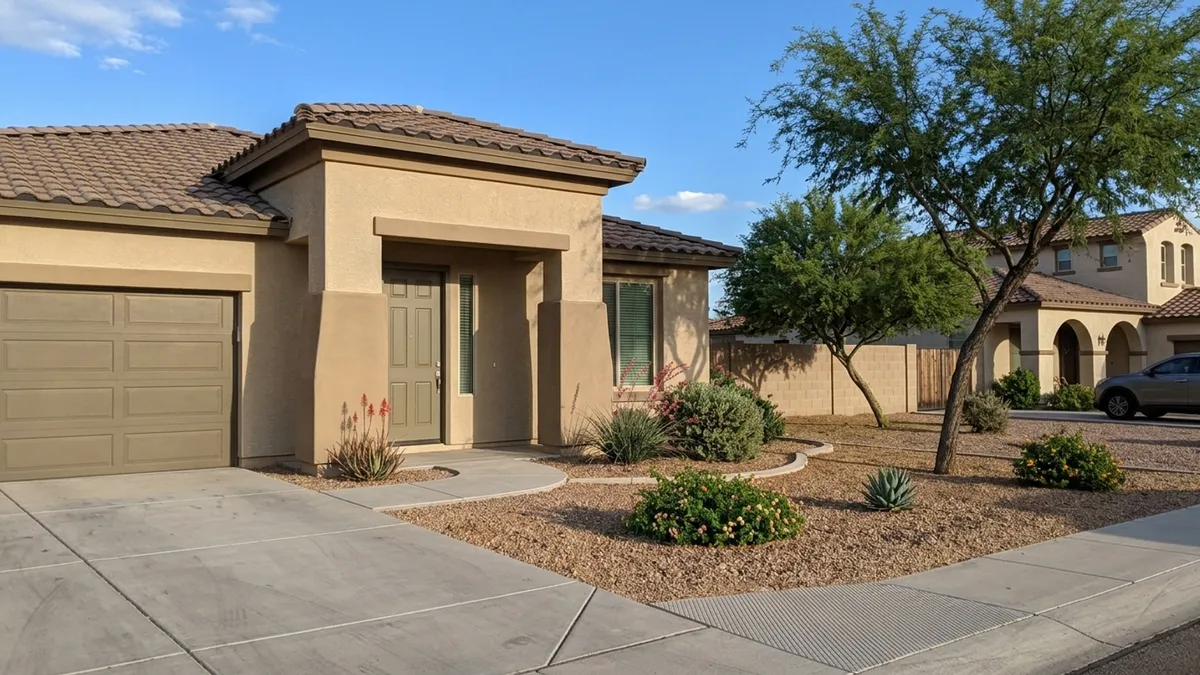
When to Lower the Price on Your House in Gilbert, AZ (2026 Data)
The median single-family home in Gilbert takes roughly 57 days to sell, according to recent 2026 data. National advice often tells sellers to cut their price after just two or three weeks, but following that timeline here means you might drop your price before your target buyer even starts looking.
Buyers in this market pay close to asking, but they rarely bid over it. If your listing sits past the local median without an offer, it usually means your price is higher than what buyers are willing to pay.
Key Takeaway
Lower the price on your Gilbert house once it has passed the local median days on market without an offer, and make it one cut big enough to reach a new search price bracket. Waiting for a bidding war rarely pays, since only 9.1% of Gilbert homes sold above list in the 90 days ending Sept. 30, 2026. If buyers are touring but not offering, fix condition or offer a concession first, and if you are selling a townhouse, revisit the price sooner.
Who This Guide Is For
Your Gilbert home is listed, or your listing just expired, and you are deciding whether to drop the price now, wait longer, or change something else first.
When Should You Lower the Price on Your House in Gilbert?
In Gilbert, a price cut is due when a listing passes the local median days on market without an offer, not at the two-to-three-week mark common in national advice. Buyers here pay close to asking, but rarely above it.
Townhouse sellers should act sooner than single-family sellers. Townhouses face roughly 7.3 months of supply with prices down about 3.6% compared to last year, against roughly 3.7 months of supply and a modest price increase for single-family houses.
Combining the calendar with your listing's activity tells you exactly what to do. Days on market tells you when to look; showings and offers tell you what to change.
Check your days on market against the Gilbert median
Generic two-to-three-week rules don't fit Gilbert, where the typical home goes about two months before going under contract. A house at day 30 isn't behind yet, but a townhouse near day 50 is. If you're under the median with steady showings, hold your price; if you're over it with no offer, plan a cut.
Gilbert townhouses that sold went under contract about nine days faster than houses, so a townhouse still sitting at seven weeks is already past its market's halfway mark. The catch is that the median is a citywide middle. If similar homes in your subdivision sold in two weeks, your clock is shorter. A listing with no showings in its first weeks shouldn't wait for the median at all.
Look at showings and offers
Read the activity pattern your listing generates. No showings means buyers' searches are passing the home over entirely, which usually points to a price or bracket problem. Showings with no offers means buyers saw the property and judged it against the price, which often points to a condition, presentation, or price problem. Ask your agent for the showing count, online views, and written buyer feedback since listing day.
The downside is that buyer feedback is often polite and vague. Without pushing for specifics through the buyer's agent, you can end up cutting the price when the real objection was the roof or the photos.
Compare your list price with Gilbert sale prices
Gilbert buyers pay close to asking, so negotiation won't close a big gap. If your price sits well above recent sold comparables, buyers will skip it instead of making an offer. Pull sold comparables from the last 90 days in your subdivision and compare them with the active listings you're competing against.
At Gilbert's typical sale-to-list ratio, a home listed at $619,900 closes roughly $13,200 under its asking price. And even if a buyer agrees to an above-market price, the lender's appraisal still has to support it, so an overpriced contract can fall apart or force a cut later anyway.
Should You Lower the Price, Wait, or Change Something Else?
First, ask whether your listing has passed the Gilbert median days on market for your property type. If not, and showings are steady, you can likely wait. If it has, read the sections on checking your days on market and deciding how much to lower the price.
Next, look at whether buyers are seeing the home at all. Few or no showings points to price or search placement, meaning a price cut is likely needed. Showings without offers points to condition or terms, so you should explore alternatives to lowering your asking price.
Finally, consider your property type and listing status. If your home is a townhouse, you're on a shorter, tougher clock and should read the townhouse section before deciding to wait. If your listing already expired, start by reviewing what to do with an expired listing before relisting at any price.
Townhouse vs. Single-Family Pricing in Gilbert
Single-family and townhouse sellers face different pressure in Gilbert, so timing differs by property type. Houses can afford a little patience; townhouses can't.
Single-family homes in Gilbert
Supply is tight and prices are still edging up, so a well-priced house has room to wait for the right buyer. Patience is reasonable up to the median, but rising prices aren't a reason to hold an overpriced listing. Add up your monthly carrying costs, mortgage, HOA, utilities, and pool service, to see what waiting another month actually costs, then compare that against what a slow price rise would add.
Gilbert houses have under four months of supply. That single-family price gain is modest, and a few extra months of carrying costs can cost more than the market gains while you wait.
Townhouses in Gilbert
Townhouse sellers face nearly twice the competition and falling prices. Based on 37 recent townhouse sales, waiting costs value as well as time, so review the price at or before the townhouse median rather than holding out. Buyers will weigh your dues, so ask your HOA for current dues and any pending special assessments buyers will see.
Townhouses sold at about the same price per square foot as detached houses, so a buyer comparing per-foot cost can weigh your townhouse against a small single-family home with a yard. That makes holding an above-market price harder than it looks on paper.
At a Glance
Median sale price, 90 days ending Sept. 30, 2026: $595,263 single-family; $375,004 townhouse (based on 37 sales); $584,722 all homes
Change in median sale price vs. a year earlier, same window: +2.5% single-family; -3.6% townhouse (37 sales); +2.6% all homes
Median days on market, 90 days ending Sept. 30, 2026: 57 single-family; 48 townhouse (37 sales); 57 all homes
Sale-to-list ratio, same window: 97.8% single-family; 98% townhouse (37 sales); 97.8% all homes
Share of homes sold above list price, same window: 9.2% single-family; 8.3% townhouse (37 sales); 9.1% all homes
Months of supply, same window: 3.7 single-family; 7.3 townhouse; 3.9 all homes
Homes for sale (inventory), same window: 947 single-family; 88 townhouse; 1,047 all homes
Homes sold, 90 days ending Sept. 30, 2026: 786 single-family; 37 townhouse; 831 all homes
Median price per square foot, same window: $280 single-family; $281 townhouse (37 sales); $281 all homes
How Much Should You Lower the Price?
Buyers search with a maximum price in round numbers, so a cut that stays inside the same bracket reaches no new buyers. Make one meaningful cut rather than several small ones, since each change shows in the listing's price history.
For illustration only: a single-family house listed at $619,900 sits above buyers who cap their search at $600,000. Moving the price to $599,900 is a cut of about 3.2%, and it puts the house in front of every buyer searching up to that ceiling. Run the search a buyer would run on Zillow and Realtor.com at your current price and at the next round price down to see what you'd be competing against.
Dropping into a lower bracket puts you at the top of it, next to homes that may be larger or newer. Buyers will still negotiate off the new price, so you have to be prepared to defend the new number based on recent sold comparables.
Alternatives to Lowering Your Asking Price
If buyers are touring your home but not making offers, the price might not be the primary issue. When the activity is there but the contracts aren't, you have options to sweeten the deal or improve the product before you touch the headline price.
Seller concessions and rate buydowns
A credit toward the buyer's closing costs or a rate buydown can lower the buyer's monthly payment more than an equal price cut would, without changing the headline price comparables will show. Ask a lender what seller-concession limits apply to conventional, FHA and VA loans at your price.
Limits apply based on loan type. Fannie Mae caps interested party contributions between 2% and 9% of the property value, and these cannot be used for the borrower's down payment. FHA rules cap seller contributions at 6% of the sales price. The downside is that a concession comes out of your proceeds just like a price cut, it's capped by loan rules, and the appraisal still has to support the contract price.
Staging, photos, and repairs
If feedback names condition, layout, or presentation, fix that before touching price. You can update photos, complete light staging, or repair items buyers flagged during their tours. Get a pre-listing inspection, or ask your agent what came up in prior inspections or cancelled escrows.
Fixes cost money up front and add weeks before buyers see the refreshed listing. If the feedback was about price, no staging budget will change the outcome.
What to Do if Your Gilbert Listing Expired
An expired listing is evidence that the last price didn't work at the activity level it drew. Relisting at the same price usually repeats the result. Under ARMLS rules, for a listing's Days on Market to reset to zero, the prior listing must remain in an off-market status of Cancelled or Expired for more than 45 consecutive days.
If the original agent relists the property less than 45 days from the off-market date, the days on market carry over to the new listing. Read your listing agreement for the expiration date, cancellation terms, and any protection-period clause. Review the showing and feedback record from the expired listing before choosing a new price.
The Michael Kent Team can review an expired listing's activity and recent comparable sales with you to help you decide whether to adjust the price or take the home off the market to reset the clock.
Gilbert Home Price Reduction FAQs
Are house prices going down in Gilbert, AZ?
No, overall house prices in Gilbert are slightly up. The median sale price for all homes rose about 2.6% compared to a year earlier, reaching roughly $584,722 for the 90 days ending Sept. 30, 2026. Prices for townhouses in Gilbert have dropped, though, meaning your property type determines the trend you face.
Is 2026 a good time to sell a house in Gilbert?
Yes, though buyers have choices. Gilbert recently had 3.9 months of supply and 1,047 homes for sale, meaning inventory is available but not overwhelming. Because buyers have options, pricing your home correctly matters more than timing the market.
What is the hardest month to sell a house in Gilbert?
It depends on local seasonal trends. The current market statistics cover a 90-day window ending in September rather than full monthly breakdowns. Ask your agent for monthly Gilbert closings over the past two years to see when sales typically slow down.
What devalues a house the most?
Condition problems that buyers find at inspection lead to the most price objections. Issues with the roof, HVAC, or foundation often cause buyers to ask for large credits or cancel the contract entirely. Get a pre-listing inspection to find and fix these defects before buyers see them.
What increases your home value the most?
Updates that improve the home's condition and curb appeal tend to yield the best returns. For specific projects and expected returns, review our guide on upgrades that increase home value.
Will buyers see that I lowered my price?
Yes, buyers will see it. Zillow's system auto-generates a price cut banner whenever a price decrease is received, and it displays these changes in the Price History section of the home details page as long as the listing is active. This is why one meaningful price cut reads better to buyers than several small ones.
How does price per square foot compare across Gilbert home types?
The median price per square foot is roughly $280 for single-family homes and $281 for townhouses, based on 37 sales in the 90 days ending Sept. 30, 2026. Multiply this figure by your home's square footage as a rough check against your list price, then confirm that number with sold comparables.
Do I owe my agent a commission if my listing expires in Arizona?
It depends on your contract. The Arizona Association of REALTORS residential listing agreement contains a blank protection period clause; if filled in, compensation remains payable if a sale is made to a buyer who saw the property during the listing term, provided it happens within that specified window and the home is not listed with another broker. Read your own agreement's expiration and protection-period clause to verify your terms.