
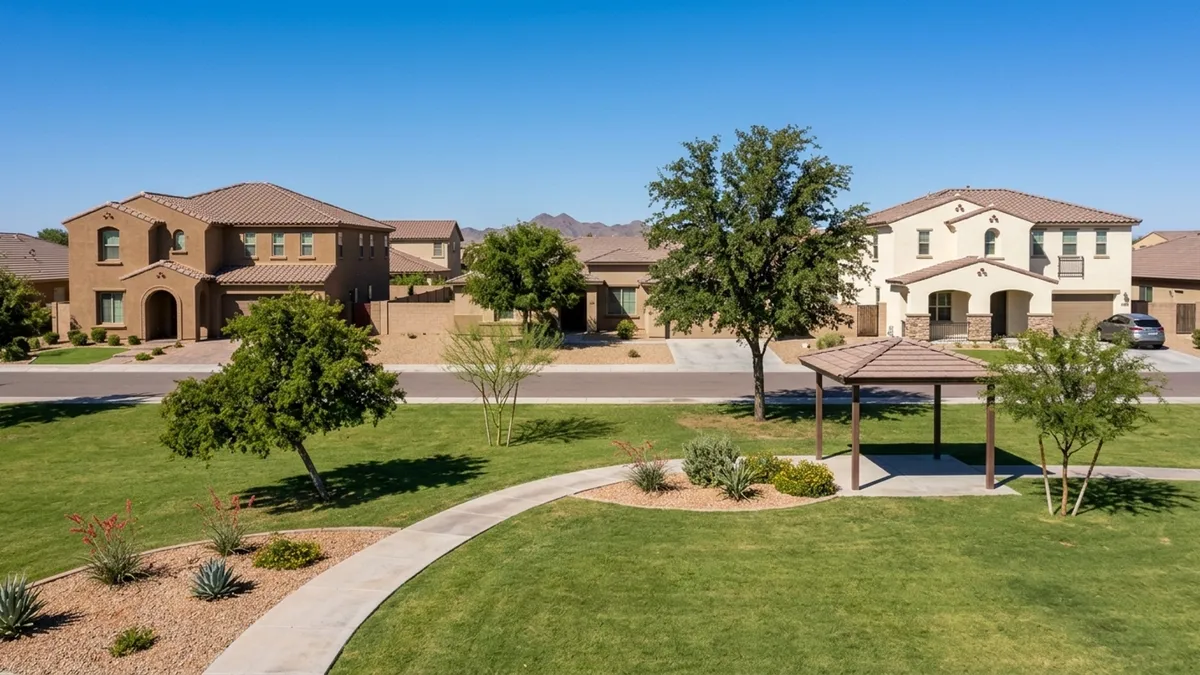
What to Know About Mortgage Rates in Gilbert, AZ
The median home sale price in Gilbert, AZ recently reached approximately $594,500, and homes are sitting on the market for an average of 55 days. Both of those numbers matter, but the one that quietly controls everything else is your interest rate. It determines what a buyer can afford each month, and it determines how quickly a seller finds a qualified offer. These calculations are particularly important for first-time home buyers in Gilbert entering the market.
Finding the right loan structure matters just as much as finding the right property. A fraction of a percentage point changes your monthly payment in ways that add up fast over 30 years - which is exactly why you want to understand how this works before you start touring houses.
How Mortgage Rates Are Set in Gilbert, AZ
Local lenders don't invent their rates. They price off the bond market and mortgage-backed securities - when investors demand higher yields from bonds, borrowing costs for everyday buyers go up. That's the baseline.
Your personal financial profile then adjusts that baseline number up or down. A lender looks at your credit history, your down payment, and the specific property before landing on the number they'll actually offer you.
Where to Find Your Exact Rate
There's no single universal number published online that applies to your situation. The figures you see on national financial websites are averages built around perfect credit profiles and 20% down payments. To see what you'll actually pay, you need a same-day quote or a formal Loan Estimate from a real lender.
Why Rates Fluctuate Daily
Mortgage pricing changes every single day - sometimes multiple times a day. Lenders adjust based on inflation reports, employment data, and global economic news. A quote you get Tuesday morning might not be valid by Thursday afternoon.
How Rate Changes Affect Your Buying Power in Gilbert
A seemingly small rate shift completely changes your monthly housing budget. In Maricopa County, the average effective property tax rate is about 0.46% to 0.47%, which is well below the national median. That lower tax burden helps keep overall monthly payments manageable, but your interest rate still drives the bulk of your housing cost.
When borrowing costs rise, your maximum purchase price drops if you're trying to hold a payment steady. Run the math on a few different scenarios before you decide what price range to shop.
Comparing Monthly Payments
Here's an illustrative example using a $594,500 home with a 20% down payment. For illustration only: at a 6% interest rate, the principal and interest payment is roughly $2,850. Move that rate to 7% and the same payment jumps to about $3,160. That's a real number you feel every month.
The Trade-Off Between Home Price and Interest Rate
If rates drop, you can afford to bid more on a house without increasing your monthly output. If rates climb, the honest move is to look at lower-priced homes to keep your budget intact. It's not a complicated equation, but buyers sometimes resist doing it.
Fixed vs. Adjustable-Rate Mortgages and Other Loan Types
The loan structure you choose directly affects the rate you receive, and lenders offer different products depending on how long you plan to stay in the home and how much cash you're bringing to closing.
Don't default to whatever your bank offers first. Compare a few different loan products before you commit - each one carries its own underwriting rules and baseline pricing.
30-Year vs. 15-Year Fixed Loans
A 30-year fixed mortgage is the standard choice because spreading the payments out keeps the monthly cost lower. A 15-year fixed loan usually carries a lower interest rate, but the compressed timeline means your monthly payment will be significantly higher.
When an Adjustable-Rate Mortgage Makes Sense
An ARM offers a lower fixed rate for an initial period - usually five to seven years - before adjusting annually based on market conditions. Borrowers who plan to sell or refinance before that introductory period ends often use ARMs to save money upfront. If you're confident about your timeline, it can be a smart call.
Conventional, FHA, VA, and USDA Loans
Government-backed loans often carry different baseline rates than conventional mortgages. VA loans, available to eligible military members, frequently offer lower rates and require zero down payment. FHA loans serve buyers with lower credit scores, though they require specific mortgage insurance premiums that add to the monthly cost.
How to Get the Lowest Mortgage Rate Possible
You can't control the bond market. You can control your financial profile, and that's where your energy should go.
Taking time to prepare your finances before applying pays off over the life of the loan. Small improvements to your application can move your rate by a fraction of a percent - which sounds trivial until you see what it costs over 30 years.
Improving Your Credit Score
Your credit score is the single biggest lever you actually control. Borrowers with scores above 740 typically get the best offers available. Paying down credit card balances and fixing errors on your credit report should happen months before you apply - not the week before.
Down Payments, Points, and Rate Buy-Downs
A larger down payment reduces the lender's risk, which often translates to a lower rate. You can also pay discount points at closing - cash upfront to permanently lower your interest rate. Rate buy-downs work similarly, except the seller or builder pays the fee to lower your rate for the first few years of the loan.
Comparing Multiple Lenders
Don't accept the first quote you receive. Comparing Loan Estimates from three different lenders is the most effective way to make sure you're getting a competitive deal. It takes a few extra days and it's worth it every time.
Locking In Your Rate
A rate lock guarantees your interest rate for a set period - usually 30 to 60 days - protecting you if the market moves before closing. Ask your lender about their lock policies as soon as your offer is accepted, not after.
Finding the Right Mortgage Lender in Gilbert, AZ
Who you borrow from matters just as much as the loan type you choose. A local Maricopa County lender understands the specific nuances of this market - HOA structures, typical appraisal timelines, the works.
National call-center lenders often struggle to meet the closing deadlines in an active market. A local professional has a reputation to uphold here and is usually reachable after hours or on weekends when something needs attention.
The Local Lender Advantage
Local lenders know the specific condo associations and neighborhood quirks in Gilbert. They can spot underwriting hurdles before they become problems, which keeps your closing on track. And when a listing agent sees a pre-approval from a lender they recognize and respect, it quietly strengthens your offer.
Questions to Ask Potential Lenders
Before you commit, ask about average closing time and how they communicate during the process. Get a full breakdown of origination fees - some lenders advertise low rates but charge high upfront costs to compensate, and that trade-off isn't always obvious at first glance.
Banks, Credit Unions, and Brokers
Retail banks offer convenience if you already have accounts there, but they only sell their own products. Credit unions sometimes offer lower fees for members. Mortgage brokers shop your application across dozens of wholesale lenders to find the best terms for your specific situation - which is worth understanding before you assume your bank is the obvious starting point.
What Rate Trends Mean for Gilbert Sellers
Sellers tend to tune out mortgage rate conversations because they're not taking out a new loan. That's a mistake. Borrowing costs directly dictate buyer demand, and with homes currently sitting on the market for an average of 55 days in Gilbert, pricing correctly for the current interest environment isn't optional.
When rates move, the pool of qualified buyers expands or contracts. That's your audience - and it changes size based on something you don't control.
How Rates Shape Buyer Demand
Higher borrowing costs shrink the buyer pool because fewer people can afford the monthly payments on a median-priced home. When rates drop, buyers come back in volume, which increases the chances of multiple offers and competitive bidding.
Pricing and Timing Your Listing
If rates are elevated, pricing competitively is how you attract the buyers who are still actively shopping. Monitoring local inventory - recently hovering around 1,006 available homes - tells you how much competition your listing is up against.
Related guides: Financial Assistance and Homebuyer Programs in Gilbert, How Much House Can I Afford in Gilbert.
Mortgage Rate FAQs
What are mortgage rates today in Gilbert, AZ?
It depends on your financial profile and the exact day you ask. Pricing changes daily based on bond markets, so you need a same-day quote or a formal Loan Estimate from a lender to know your specific number. Online averages don't reflect what an individual buyer actually pays.
How much does a 1% difference in a mortgage rate cost me?
More than most buyers expect. For illustration only, on a $594,500 home with 20% down, a 1% rate increase adds roughly $310 to the monthly principal and interest payment. Over a 30-year loan, that's over $110,000 in additional interest.
How do I get the best mortgage rate as a buyer in Gilbert?
Focus on raising your credit score and saving for a larger down payment. Then compare official Loan Estimates from at least three different lenders - that's the most effective way to secure the lowest available terms.
Should I wait for rates to drop before buying a home in Gilbert?
It depends on your personal timeline and budget. Waiting for lower rates might save you money on interest, but if home prices continue to rise during that time, you could end up paying more overall.
How do I choose a mortgage lender in Gilbert, AZ?
Interview local professionals who understand Maricopa County's housing market. Compare their fees, ask about average closing timelines, and pay attention to how clearly they communicate during the pre-approval stage.
How do current mortgage rates affect my ability to sell a house in Gilbert?
Rates dictate how many buyers can afford your asking price. When borrowing costs are higher, homes tend to sit on the market longer - currently averaging 55 days in Gilbert - which means pricing competitively isn't just smart, it's necessary to attract qualified offers.
Thinking of Buying or Selling in Gilbert? Get Local Guidance
Buying or selling a home means coordinating a lot of moving pieces at once, and financing is just one of them. Working with a local real estate agent helps you align your goals with what the market is actually doing right now.
A knowledgeable agent can connect you with trusted local lenders who have proven track records in this area. The right team doesn't just make the process smoother - it means you're making informed decisions from the first house tour all the way to the closing table.