
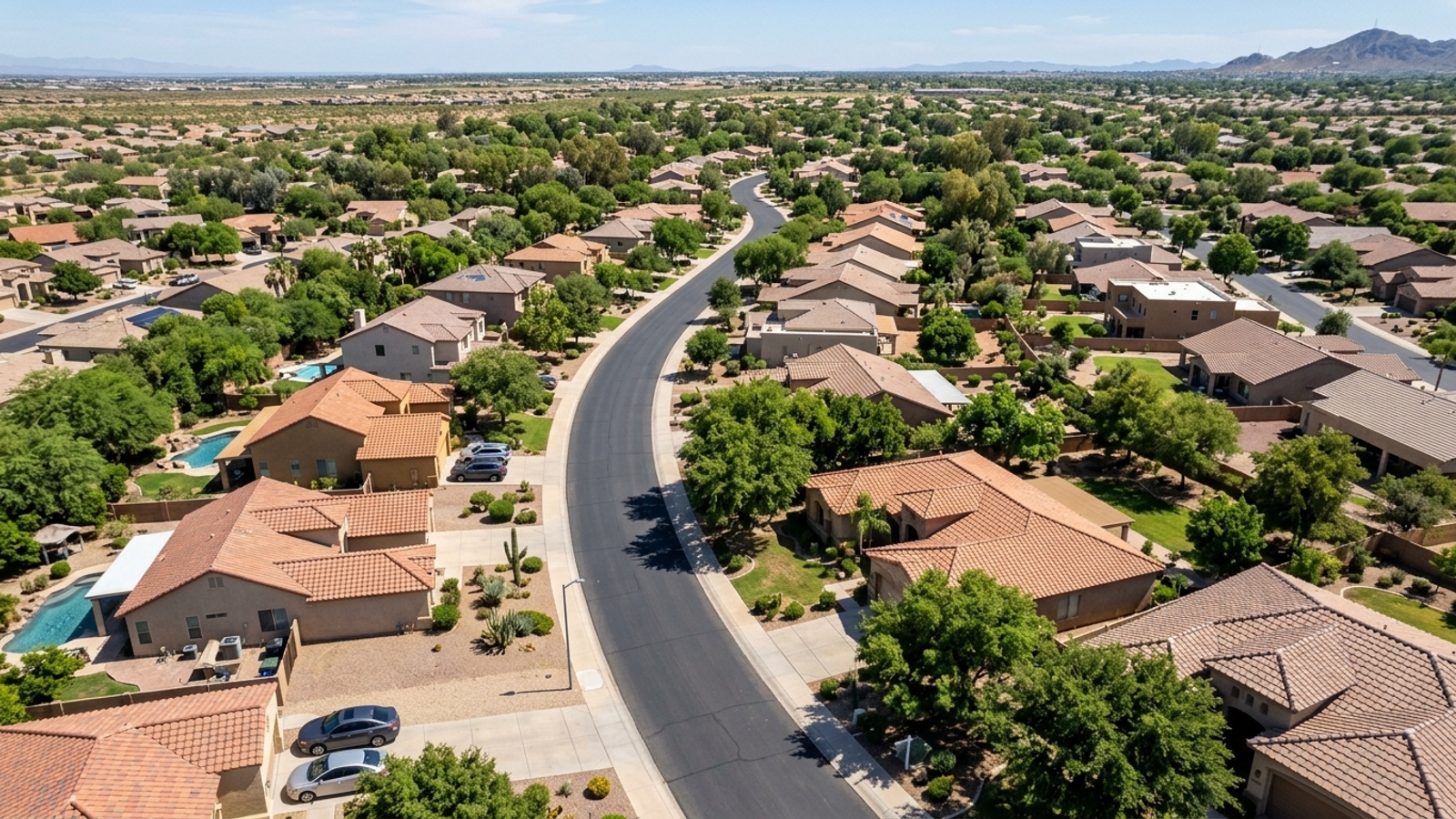
How Long It Takes to Sell Your Home in Gilbert, AZ (2026 Timeline)
Right now, homes in Gilbert, AZ are spending a median of 55 days on the market before going under contract. With roughly 3.4 months of supply available as of late summer 2026, you're looking at a balanced market - one that rewards sellers who price correctly from day one. Out of 902 homes sold recently in the area, nearly 10% closed above their initial asking price. If you are preparing to sell your home in Gilbert, AZ, these numbers provide a solid baseline for what to expect.
Knowing the actual timeline matters because selling a home isn't just about the listing period. If you're coordinating a new purchase or a relocation, the full picture - from the day you decide to sell to the day you hand over keys - involves several distinct phases, and local dynamics in Maricopa County shape how fast each one moves.
Average Time on the Market in Gilbert and Surrounding Areas
Gilbert's median days on market currently sits around 55 days. That number measures the window between the day a property hits the local MLS and the day the seller accepts an offer. Homes priced accurately for their condition routinely move faster, pulling offers within the first few weeks.
Gilbert runs ahead of the broader regional pace. Across Maricopa County, homes average between 73 and 82 days on the market. Statewide, Arizona's average ranges from the high 50s to the upper 60s - which puts Gilbert on the faster end of the spectrum.
Days on market in the 85234 zip code
Drilling down to the neighborhood level, homes in the 85234 zip code have recently averaged about 53 days on the market - a slight uptick from 50 days the previous year.
Some data models track pending sales differently, with certain segments in 85234 going under contract in as little as 15 days. Your best reference point is recent comparable sales in your specific subdivision, not the zip code average.
The Full Home-Selling Timeline Step by Step
The 55-day market average only tells part of the story. The complete process starts weeks before a buyer ever tours the property and runs for a month or more after an offer is accepted. Plan for a total timeline of three to four months from start to finish.
Skipping steps in the preparation phase tends to cost you time on the back end. Staging, minor repairs, and professional photography all require coordination - but getting them done upfront is what compresses the time you spend waiting for a qualified buyer.
Preparing your house and going live
Getting a property ready for the public typically takes two to four weeks. That window covers deep cleaning, decluttering, painting, and addressing deferred maintenance that might surface on a buyer's inspection report. Once the house is in showing condition, your agent schedules photography and pulls together the marketing materials. When the listing goes live on the MLS, showings start immediately.
Time on market until you get an offer
This is the 55-day phase - the active period when buyers tour the home and submit offers. Homes priced accurately for their condition often get offers faster; overpriced properties sit longer and pull the average up. Once both parties sign the purchase agreement, the home moves into pending status.
From accepted offer to closing day
Escrow generally takes 30 to 45 days. During that time, the buyer completes inspections, secures financing, and orders an appraisal. Cash buyers can close much faster - sometimes in as little as a week or two - since they bypass mortgage underwriting and the appraisal process entirely. Traditional financed offers need the full month to work through the loan and clear the title.
Factors That Speed Up or Slow Down a Gilbert Home Sale
Gilbert currently holds about 1,006 active listings, which translates to 3.4 months of supply. That gives buyers options, which means your property needs to stand out to pull a quick offer. But beyond broad market conditions, the two levers you actually control are your asking price and your home's physical condition.
Pricing strategy and reductions
Homes listed at fair market value based on recent comparable sales move the fastest. Price above the market, and you'll likely be sitting there several weeks before you cut the price - which just extends your total days on market and signals to buyers that something might be off.
Gilbert sellers are currently receiving about 97.9% of their list price on average. If your home is getting consistent showings but no offers in the first few weeks, that's the market telling you something. Review the pricing strategy with your agent before the listing goes stale.
Property condition and selling as-is
Outdated fixtures, worn flooring, and visible repair needs shrink your buyer pool. Move-in ready homes appeal to a much broader segment of traditional buyers who aren't looking to take on a renovation project before they unpack.
Selling as-is to a cash buyer is a faster route, but it typically comes with a lower final sale price. It's a legitimate option if speed matters more to you than maximizing your net proceeds.
Local inventory and buyer demand
When inventory drops below three months of supply, the market tilts toward sellers and timelines compress. As inventory climbs toward four or five months, buyers take their time - they're viewing multiple properties before committing. Keeping an eye on those supply shifts helps you set realistic expectations for your listing.
Best and Worst Times of Year to List in Arizona
Real estate in Arizona follows clear seasonal patterns. When you list affects both how fast the home sells and what price you ultimately get - buyer demand doesn't stay constant throughout the year.
The best month for speed and the best month for price aren't exactly the same, so it's worth thinking through your priorities before you pick a target date.
The fastest and most profitable months to list
Late spring through early summer is the sweet spot. April tends to be the fastest month to sell, with lower average days on market than the annual norm. If your priority is price rather than speed, June is historically the strongest month - homes listed in June have sold for well above the annual average listing price.
The hardest months for seller activity
December is widely considered the hardest month to sell a house in Arizona and the broader Phoenix metro area. Buyer activity drops sharply as people shift focus to holidays and travel, and families generally avoid moving mid-school year. If you list in December, expect fewer showings and a longer wait for an acceptable offer.
Deciding whether to wait
If you're working against a hard deadline - a job relocation, a financial need - list when you're ready. The market doesn't shut down in winter; it just slows down. But if your timeline is flexible, holding off for the spring market can deliver a faster sale and stronger offers. It's a simple trade-off worth running through with your agent before you commit to a date.
When Is a House Sitting Too Long?
With Gilbert's median at roughly 55 days, a property approaching the 60-day mark without an offer needs a hard look. Buyers and their agents track how long a listing has been active, and extended market time tends to breed assumptions - whether or not those assumptions are fair.
Stale listings lose their early momentum and drift lower in search results. The longer a home sits, the harder it becomes to shake the perception that something is wrong with it.
Recognizing a stale listing
A lack of showing requests in the first two weeks is an immediate red flag - usually the asking price or the listing photos are the culprit. If buyers are touring but not submitting offers, the condition or layout probably doesn't justify the price. Hitting 100 days on the market in an area that averages 55 days is a clear signal of a serious misalignment with current market expectations. Extended market time is direct feedback from buyers. It's worth treating it that way.
Adjusting your strategy
Start by sitting down with your agent to go through showing feedback and look at comparable homes that actually closed during the same period. A strategic price reduction is the most common adjustment - and usually the most effective one.
The other option is pulling the listing temporarily, completing updates, refreshing the staging, and re-entering the market with a stronger presentation. A short break lets the property reset its days-on-market clock before launching a new push.
Selling Shortly After Buying and Tax Considerations
Sometimes life moves faster than your original plan, and you need to sell sooner than you expected. There are no legal restrictions on how quickly you can resell a house after buying it - but the tax implications depending on your timeline are significant.
The core issue for short-term sellers is capital gains taxes on any profit from the sale. Knowing the ownership thresholds before you list helps you avoid an unpleasant surprise at tax time.
The two-year capital gains exclusion
To exclude profit from a primary residence sale, the IRS requires that you've owned and lived in the home for at least two of the five years preceding the sale. Single filers can exclude up to $250,000 of profit; married couples filing jointly can exclude up to $500,000 - provided they meet that two-year residency requirement. Sell before hitting the two-year mark and you'll generally owe short-term or long-term capital gains tax on the net profit.
Special cases like refinancing or acting as an executor
Refinancing your mortgage doesn't reset the two-year clock. The timeline runs from your original purchase date and the duration of your primary residency - not the date of your most recent loan.
Executors handling an estate sale operate under a different set of rules entirely. Inherited properties generally receive a step-up in basis to the fair market value at the time of the original owner's death, which often minimizes capital gains taxes regardless of how quickly the executor sells.
Estimating Your Net Proceeds in Gilbert
The median sale price in Gilbert currently sits around $594,500. That's the gross number - what the buyer pays. Your actual take-home is lower once you account for transaction costs. Running those numbers early gives you a clear picture of what you'll have available for your next move.
Agent commissions and closing costs
Real estate commissions generally run 5% to 6% of the total sale price, split between the listing agent and the buyer's agent. On a $594,500 sale, that's roughly $29,725 to $35,670.
Closing costs typically add another 1% to 3% on top of that. Those expenses include title insurance, escrow fees, prorated property taxes, and any seller concessions you've agreed to.
Calculating your final take-home amount
For illustration only: on a median $594,500 home, assuming 6% in commissions and 2% in closing costs, total deductions come to about $47,560. That leaves approximately $546,940 before your mortgage payoff. Subtract your current payoff amount from that figure and you've got your estimated cash in hand at closing.
Frequently Asked Questions
How long does it take to sell a house in Gilbert, AZ?
It currently takes a median of 55 days for a house in Gilbert to go under contract. The full process - from listing to the final closing day - typically runs three to four months.
What is the hardest month to sell a house in Arizona?
December. Buyer activity drops sharply due to the holidays, and families generally avoid moving mid-school year.
How long is too long for a house to be on the market in Gilbert?
Anything approaching or exceeding 60 days warrants a strategy review, given Gilbert's median of 55 days. Hitting 100 days on the market signals a serious issue with the asking price or property condition.
How long should a house sit before you reduce the price?
If your home has been getting consistent showings for two to three weeks with no offers, it's time to look at a price reduction. A lack of showing requests in the first two weeks is a signal to act even sooner.
How long after buying a house can you sell it (and avoid capital gains)?
You need to have owned and lived in the home as your primary residence for at least two of the five years before the sale. Sell before that two-year mark and your profits will generally be subject to capital gains taxes.
How much do you make when you sell your house in Gilbert?
It depends on your mortgage balance, but plan for commissions and closing costs to total 6% to 9% of the sale price. On a median $594,500 Gilbert home, those costs subtract roughly $47,560 from the gross sale price.