How Much Is Your Home Worth?

Contact
ReMax Fine Properties
License #: SA550891000
License #: 268528
355 E Germann Rd #130, Gilbert AZ 85297
Setting Your Budget: How Much House Can I Afford in Gilbert, AZ?
The median sale price for a home in Gilbert, AZ sits around $579,000 as of mid-2026. Buyers entering the market right now are looking at roughly 1,001 active listings to choose from across the town. Finding the right property is easier when you work with the best real estate agent in Gilbert, AZ.
Figuring out your exact purchasing power requires looking beyond the sticker price. You have to factor in local property taxes, homeowners association dues, and current interest rates to pin down a realistic monthly payment.
Calculating Your Home Buying Budget
Lenders typically use the 28/36 rule to determine maximum loan amounts. This guideline suggests spending no more than 28% of your gross monthly income on housing costs and no more than 36% on total debt. Total debt includes your future mortgage payment plus car loans, student loans, and minimum credit card payments.
Your debt-to-income ratio dictates how much a bank will lend you. If your monthly obligations push past that 36% threshold, buyers should look at paying down existing balances before applying. A lower debt load increases your borrowing capacity and gives you more breathing room in your monthly budget.
The size of your down payment changes your baseline loan amount and your monthly carrying costs. Putting down 20% eliminates private mortgage insurance (PMI), which saves hundreds of dollars each month. Buyers should also check their credit scores, as a higher tier secures a lower interest rate over the life of the loan.
Current Home Prices in Gilbert
Homes in Gilbert, AZ are currently selling for a median price of $579,000. Properties stay on the market for roughly 46 days before closing, giving buyers a reasonable window to tour homes and make offers. Sellers are getting about 98.3% of their list price, meaning most transactions close very close to the asking amount.
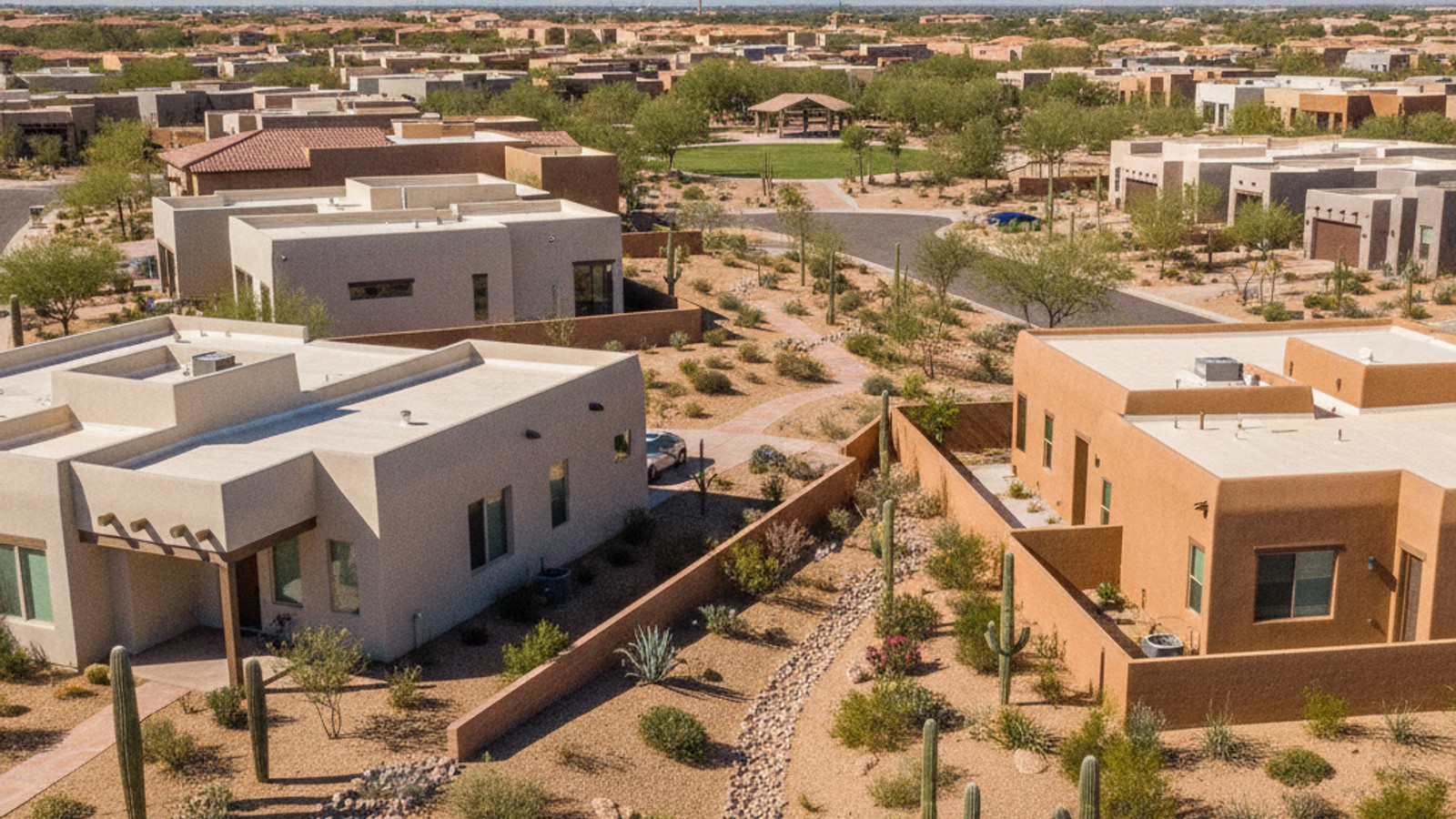
Pricing varies widely depending on the neighborhood and the age of the subdivision. Master-planned communities often command a premium for their integrated parks and community pools. Older subdivisions without community management tend to offer lower entry points for first-time buyers.
Neighborhoods like Agritopia and Power Ranch represent two distinct pricing tiers within the town. Agritopia features higher-density housing with shared agricultural spaces, while Power Ranch offers larger traditional lots. Buyers should review recent sales in both areas to understand how community features impact the final purchase price.
The Real Monthly Cost of Owning a Home in Gilbert
The base principal and interest payment is only one part of your housing budget. Maricopa County assesses property taxes based on your zip code and the home's assessed value. The effective property tax rate in the area sits around 0.46%, which adds a few hundred dollars to your monthly payment.
Homeowners insurance and utility rates also impact your bottom line. Average home insurance policies in the area cost roughly $195 per month, or about $2,300 annually. Recent utility rate increases mean buyers should ask sellers for a 12-month history of electricity and water bills to estimate summer cooling costs.
Homeowners association (HOA) fees are a standard expense in most local master-planned communities. These fees cover common area maintenance, community pools, and sometimes front yard landscaping. Residents in Agritopia pay roughly $150 per month, while those in Power Ranch pay about $236 per month.
Local Amenities That Influence Value
Commute times and transportation access dictate property values across the town. Homes located near the Loop 202 SanTan Freeway offer faster access to major employment hubs in Phoenix and Chandler. Proximity to the Phoenix-Mesa Gateway Airport also drives demand for properties in the southeastern section of town.
The Heritage District serves as the town's primary dining and entertainment center. Properties within walking or short biking distance of this downtown strip frequently sell faster than those on the outskirts. Buyers should expect to pay a premium for homes situated near these commercial amenities.
Access to outdoor recreation and specific school boundaries also shape local pricing. The Gilbert Public Schools district lines influence where many buyers choose to focus their search. Homes situated near major recreational spaces like Freestone Park and Desert Sky Park typically hold their value well over time.
How to Use an Arizona Mortgage Calculator
Online affordability tools help you convert a purchase price into an estimated monthly payment. You start by entering your gross annual income, your planned down payment, and the current interest rate. This gives you a baseline principal and interest figure.
To get an accurate number, you need to plug in local variables. Add the 0.46% Maricopa County property tax rate and a $195 monthly insurance estimate. If you are looking at specific neighborhoods, include the exact HOA fee for that subdivision.
A calculator provides a great starting point, but it does not replace a formal lender review. Buyers should get pre-approved by a local mortgage broker to lock in their rate and verify their exact budget. A pre-approval letter shows sellers you have the verified funds to close the deal.
Frequently Asked Questions
What salary do I need to afford a $500,000 house in Gilbert?
Assuming a 20% down payment and current interest rates, you generally need a household income of around $110,000 to $120,000 to comfortably carry a $500,000 home. This factors in the local 0.46% property tax rate and average insurance costs. Buyers with higher monthly debt obligations will need a proportionally higher salary to qualify.
What are the typical monthly costs of owning a home in Gilbert, AZ?
Beyond the mortgage, you will pay property taxes, insurance, and likely an HOA fee. Property taxes add about $150 to $250 a month for a median-priced home, while insurance averages $195. HOA dues range from $100 to over $250 depending on the community amenities.
Are there first-time homebuyer programs available in Arizona?
Yes, the Arizona Department of Housing offers several assistance programs, including the Home Plus program. This initiative provides a 30-year fixed-rate mortgage paired with down payment assistance grants. Applicants must meet specific income limits and complete a certified homebuyer education course.
Is it better to rent or buy a home in Gilbert right now?
Renting offers flexibility and avoids the maintenance costs associated with the harsh summer climate. Buying locks in your monthly housing payment and builds equity in a market where the median home price sits at $579,000. The right choice depends on your timeline; buyers planning to stay for at least five to seven years generally offset the initial closing costs.
How much do HOA fees in Gilbert usually impact my maximum home buying budget?
Lenders include HOA dues in your debt-to-income ratio, which directly reduces your maximum loan amount. A $200 monthly HOA fee can decrease your total purchasing power by roughly $30,000 to $40,000. Buyers should factor these dues into their initial calculations before touring master-planned communities.
Which local amenities or neighborhoods in Gilbert drive up home prices the most?
Homes located near the Heritage District command higher prices due to the concentration of restaurants and retail. Properties near the Loop 202 SanTan Freeway also see strong demand for their commute convenience. Access to major green spaces like Freestone Park adds a premium to nearby subdivisions.




Disclaimer: All information contained on this website is deemed reliable but not guaranteed. All properties are subject to prior sale, change or withdrawal notice sellingphoenixaz.net believes all information to be correct but assumes no legal responsibility for accuracy.